
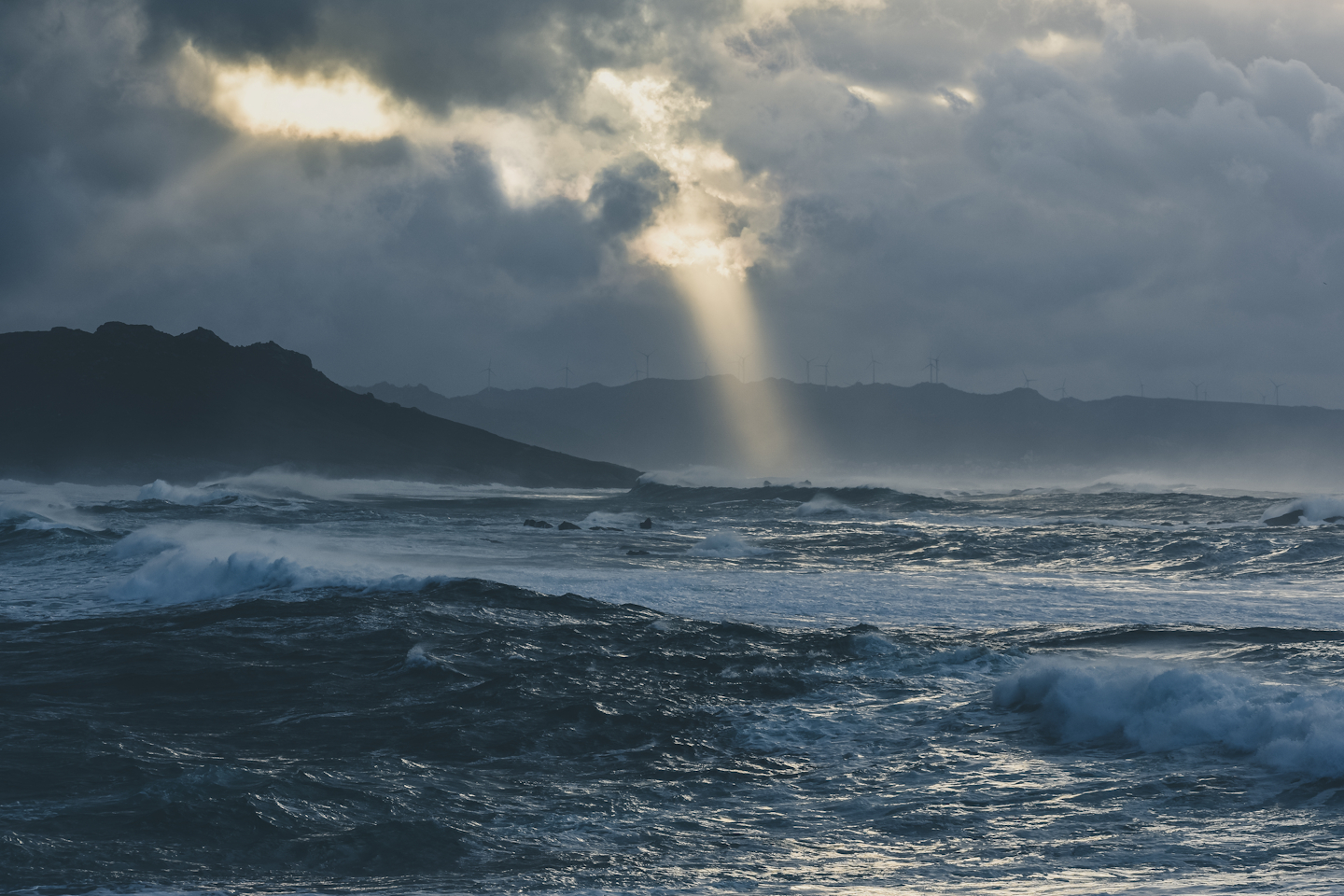
A ship can be class approved, structurally robust, and fully compliant with every design rule that governs modern construction, yet still be exposed to unnecessary structural punishment if heavy weather decisions are made too late or made with the wrong priorities. That is the real tension at the heart of storm navigation. Design strength gives a vessel a safety envelope, but good seamanship determines how much of that envelope is consumed on any given voyage. Masters do not simply navigate through bad weather. They manage how wave energy is allowed to enter the hull, how long the ship remains exposed to damaging encounter patterns, and how commercial pressure is prevented from turning rough water into structural wear.
One of the most important misunderstandings in heavy weather is the idea that damage comes mainly from spectacular moments. In reality, serious structural deterioration is often far less dramatic. It builds through repeated motion, cyclic bending, localized impact, and long hours of operating in sea states that keep the ship under persistent dynamic stress. The hull is usually not weakened by one cinematic wave alone, but by the accumulation of thousands of stress cycles that were allowed to repeat longer than necessary. That is why weather judgment on the bridge should be understood not only as navigational skill, but as structural stewardship.
A Master who reads the sea correctly knows that not all waves load the hull in the same way. Local wind seas tend to be steep, irregular, and short in period. They excite rapid vessel responses, sharp pitching, abrupt accelerations, and uncomfortable motion that often translates into concentrated stress forward and on exposed fittings. Swell is different. It can look more orderly, sometimes even deceptively gentle, yet it carries organized energy over long distances and can impose serious longitudinal loading when the encounter pattern lines up badly with the ship’s length and heading. Wave height alone is never enough to explain structural risk. Period, direction, and encounter frequency decide whether a sea state is merely unpleasant or mechanically dangerous.
That distinction becomes critical when slamming enters the picture. Slamming is not just noise, spray, or discomfort. It is a violent hydrodynamic impact that occurs when parts of the hull emerge and then re enter the water surface with force. The pressures involved are short lived but severe, and because they act on relatively small areas, they create highly concentrated local loads. A vessel driving too hard into head seas with a light forward draft can begin accumulating impact damage far earlier than the bridge team may want to admit. Repeated slamming is not a comfort issue dressed up as technical language. It is a fatigue issue with real consequences for plating, stiffeners, internal framing, and long term hull life.
Alongside local impact, the Master must also think globally about the ship as a beam moving through alternating support patterns. Every time the vessel rides over a wave system, it is exposed to changing hogging and sagging moments. The sea supports different parts of the hull at different times, while static loading from cargo, ballast, and fuel remains in place. In heavy weather, those dynamic bending loads can become significant, especially if ballast management, trim, and routing choices are not working together. A ship under stress is never experiencing one load at a time. It is carrying static and dynamic demands simultaneously.
This is where operational limits matter. Class rules and design calculations establish boundaries for motion, acceleration, bending, torsion, deck wetness, and slamming risk, but those values are not targets to sail near simply because the vessel is technically capable of surviving them. They exist to define what the structure can endure without unacceptable risk, not what it should routinely absorb for the sake of schedule. Operating near the limit may preserve the voyage, yet still consume structural margin that will be paid for later in fatigue, cracking, maintenance, and reduced residual strength. The wisest Master does not ask whether the ship can survive the next sector. He asks how much unnecessary punishment can still be avoided.
Quartering and beam seas introduce a different kind of danger because not all structural loading is purely vertical. Wide hatch ships and other torsion sensitive hulls can experience repeated twisting as asymmetric wave action travels along the vessel. Parametric rolling and dynamic stability variation can develop when encounter timing interacts badly with the ship’s natural behavior, especially in longitudinal sea conditions. Once that motion begins to build, cargo securing loads rise quickly, torsional stress increases, and options narrow. The best response to dangerous motion is usually the one taken before the motion becomes dramatic.
That is why weather routing has become so valuable in modern seamanship. Routing is not simply about avoiding the worst part of a storm on a chart. It is about controlling encounter angle, timing exposure, preserving sea room, and preventing the ship from spending long periods in structurally punishing patterns. Even small changes in heading can reduce vertical acceleration, lower bow emergence, and break the sequence that produces repeated impact. A carefully timed slowdown can allow a system to move away before the vessel meets its worst quadrant. Routing transforms heavy weather from a passive hazard into an actively managed source of structural load.
Speed management remains the fastest and most immediate lever available to the Master. Few decisions alter hydrodynamic loading as quickly as a deliberate reduction in speed. Because impact severity rises sharply with relative velocity, slowing down can reduce slamming loads, soften accelerations, stabilize engine demand, and lessen green water exposure on deck. But speed must be handled intelligently. Too much reduction in the wrong sea condition can affect steerage, extend exposure, or shift the vessel into another unfavorable motion pattern. The right speed is not the fastest the schedule can tolerate, nor the slowest the bridge can accept. It is the speed that best controls structural stress while preserving safe handling.
In the end, storms, swell, and slamming are not separate topics. They are connected expressions of how the ocean transfers energy into the ship. The Master who understands this does more than keep the vessel moving. He protects the fatigue life of the hull, the integrity of the cargo spaces, the confidence of the crew, and the long term earning capacity of the asset. Heavy weather seamanship is not simply about getting through the storm. It is about deciding how much of the ship will be spent in doing so.